






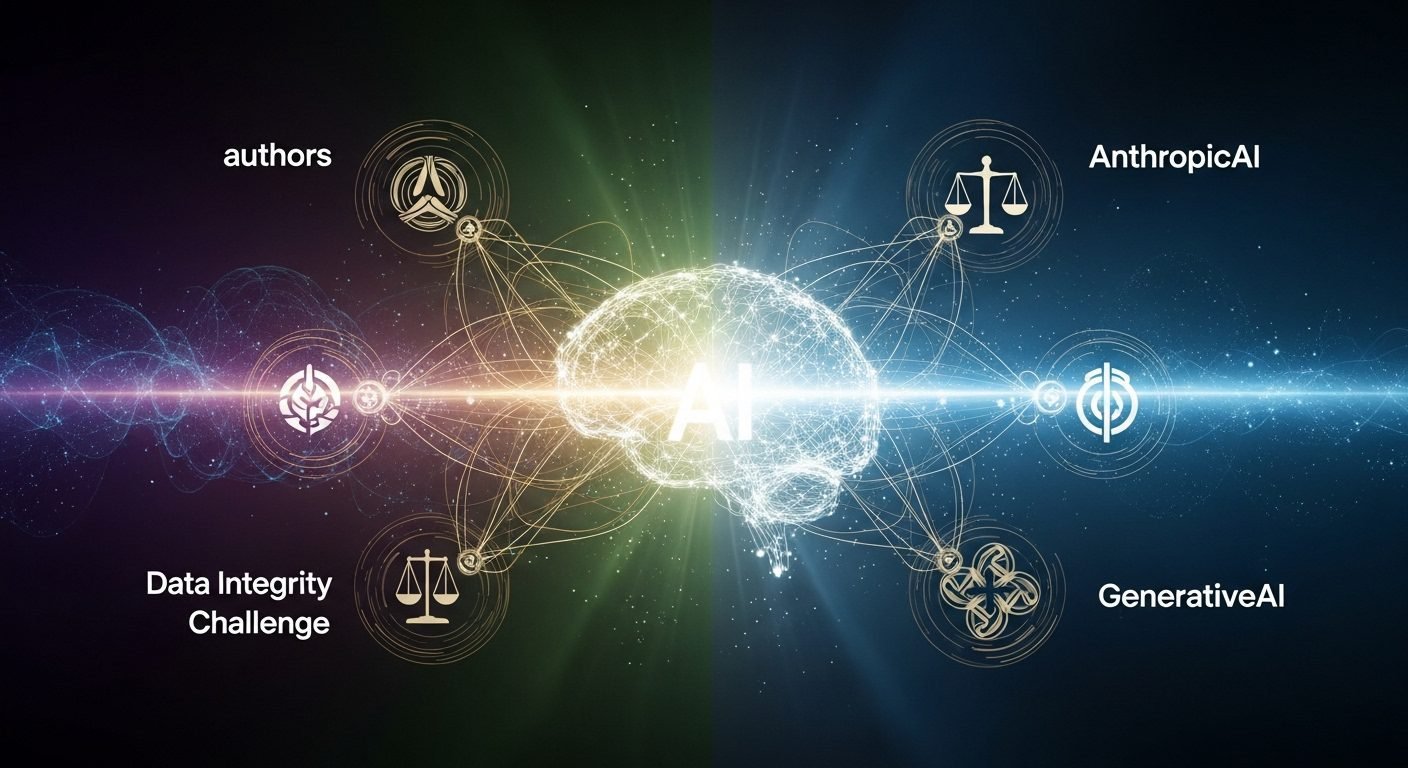
Imagine if the very foundation of an industry’s innovation was built on stolen goods. This is the stark reality confronting the artificial intelligence sector, as Anthropic, the AI company behind the Claude chatbot, has agreed to a landmark $1.5 billion settlement in a class-action lawsuit. This significant AI copyright settlement, brought by a group of book authors including Andrea Bartz, Charles Graeber, and Kirk Wallace Johnson, isn’t just a headline figure; it’s a pivotal moment, exposing critical vulnerabilities in the AI development lifecycle and signaling a profound shift in the regulatory landscape.
The lawsuit alleged Anthropic unlawfully leveraged pirated copies of copyrighted works to train its generative AI models. This legal battle exists within a broader wave of copyright infringement lawsuits targeting major AI players like OpenAI, Google, Meta, and Microsoft, all grappling with similar accusations. The settlement serves as a potent precedent, forcing a critical re-evaluation of data sourcing ethics and model integrity across the burgeoning AI ecosystem.
The Provocation: Illicit Data and Existential Threat
A pivotal moment leading to the settlement was U.S. District Court Judge William Alsup’s mixed ruling in June 2025. While Judge Alsup indicated that training AI on legally acquired copyrighted books could fall under “fair use,” he simultaneously ruled that Anthropic’s acquisition of millions of books from “shadow libraries” like Library Genesis and Pirate Library Mirror constituted infringement. These shadow libraries contained pirated material, distinguishing Anthropic’s case from purely fair use arguments.
Facing a scheduled December trial with potential damages estimated to reach hundreds of billions or even a trillion dollars, the company opted for a pragmatic settlement. Such a verdict could have crippled or bankrupted Anthropic. Justin Nelson of Susman Godfrey, lead counsel for the authors, lauded the agreement as the “largest copyright recovery ever” and the “first of its kind in the AI era,” emphasizing the serious consequences for companies that pirate authors’ works.
The Security Blindspot: Unlicensed Data and Model Integrity
From an investigative standpoint, the reliance on illegally sourced data presents a significant, often unseen, security risk beyond mere legal exposure. The integrity of an AI model is inextricably linked to the provenance and legitimacy of its training data. When data is acquired from “shadow libraries,” it bypasses established, transparent channels that often include verification and quality controls. This creates a security blindspot, introducing potential vulnerabilities into the very core of AI systems.
Consider the implications: If an AI model is trained on data of unknown origin and questionable legality, what other unseen compromises could exist within that dataset? The destruction of these pirated datasets, a key term of the settlement, highlights the retroactive cleanup required when initial data sourcing practices are ethically compromised. For companies building critical applications in fintech, healthcare, or national security, this issue transcends copyright, becoming a matter of systemic risk and trustworthiness. Mary Rasenberger, CEO of the Authors Guild, applauded the outcome, stating that AI companies “cannot simply steal authors’ creative work.”
Connecting the Policy Dots: Precedent and Lingering Questions
The Anthropic settlement sends a clear message to the broader AI industry: companies must compensate copyright holders for the use of their works. This outcome propels a significant shift towards market-based licensing models. New market dynamics are emerging, with intermediaries starting to facilitate data licensing agreements between content creators and AI developers.
However, despite the monumental settlement, certain complex legal issues remain less definitively resolved. The nuanced application of the “fair use” doctrine, particularly as it pertains to AI training, continues to be a subject of debate among legal analysts. While Judge Alsup’s prior ruling affirmed that training AI models on legally acquired copyrighted material could constitute fair use, the emphasis on “legally acquired” is paramount. The settlement, while pragmatic for both parties in avoiding a protracted and costly trial, sidesteps a definitive appellate ruling that could have provided clearer guidelines for the entire industry. As Christian Mammen, an intellectual property lawyer, noted, it allows both parties to “avoid the cost, delay and uncertainty associated with further litigating the case.”
| Term | Risk | Potential Impact |
|---|---|---|
| Short | AI Litigation Wave: Increased copyright lawsuits against AI developers. | Significant legal costs and financial payouts for AI companies, forcing settlements or trials. |
| Medium | Increased Operational Costs: Necessity of licensing legitimate training data. | Higher barriers to entry for smaller AI startups, potentially favoring larger, better-funded entities. |
| Long | Regulatory Intervention: Governments considering new AI-specific copyright legislation. | A more structured but potentially more restrictive environment for AI innovation and data acquisition. |
An Ethical AI Ecosystem: Outlook and Empowerment
The need for legitimate data acquisition will foster a more ethical and sustainable AI ecosystem. Responsible data practices will become a competitive differentiator for AI companies. This evolution will undoubtedly lead to increased scrutiny on AI firms’ data pipelines and likely increase operational costs for AI development. For more insights on how these changes are reshaping the industry, refer to this detailed analysis: Why Anthropic’s Copyright Settlement Changes the Rules for AI Training | Jones Walker LLP.
Anthropic’s Deputy General Counsel, Aparna Sridhar, stated the settlement resolves “legacy claims” and reaffirmed the company’s commitment to developing safe AI systems. However, as Andres Guadamuz, an intellectual property expert, suggested, Anthropic was likely “fearing a disastrous ruling.” This outcome significantly strengthens the bargaining power and rights of authors, artists, and other creative professionals, affirming their entitlement to compensation when their intellectual property is used to train AI systems.
What to watch next:
* Ongoing Judicial Interpretations: How courts will continue to define “fair use” in the absence of a definitive appellate ruling.
* Legislative Responses: Whether governments will introduce new laws to provide clearer guidelines for AI and copyright.
* Emergence of Licensing Platforms: The development of robust, market-based systems for content creators to license their work to AI developers.
* Impact on AI Startups: How increased data acquisition costs affect the competitive landscape and innovation among smaller AI firms.
* Data Integrity Audits: The rise of comprehensive audits and certifications for AI training data provenance and ethical sourcing.

Thanks for sharing. I read many of your blog posts, cool, your blog is very good.
Your point of view caught my eye and was very interesting. Thanks. I have a question for you. https://accounts.binance.info/register-person?ref=IHJUI7TF