






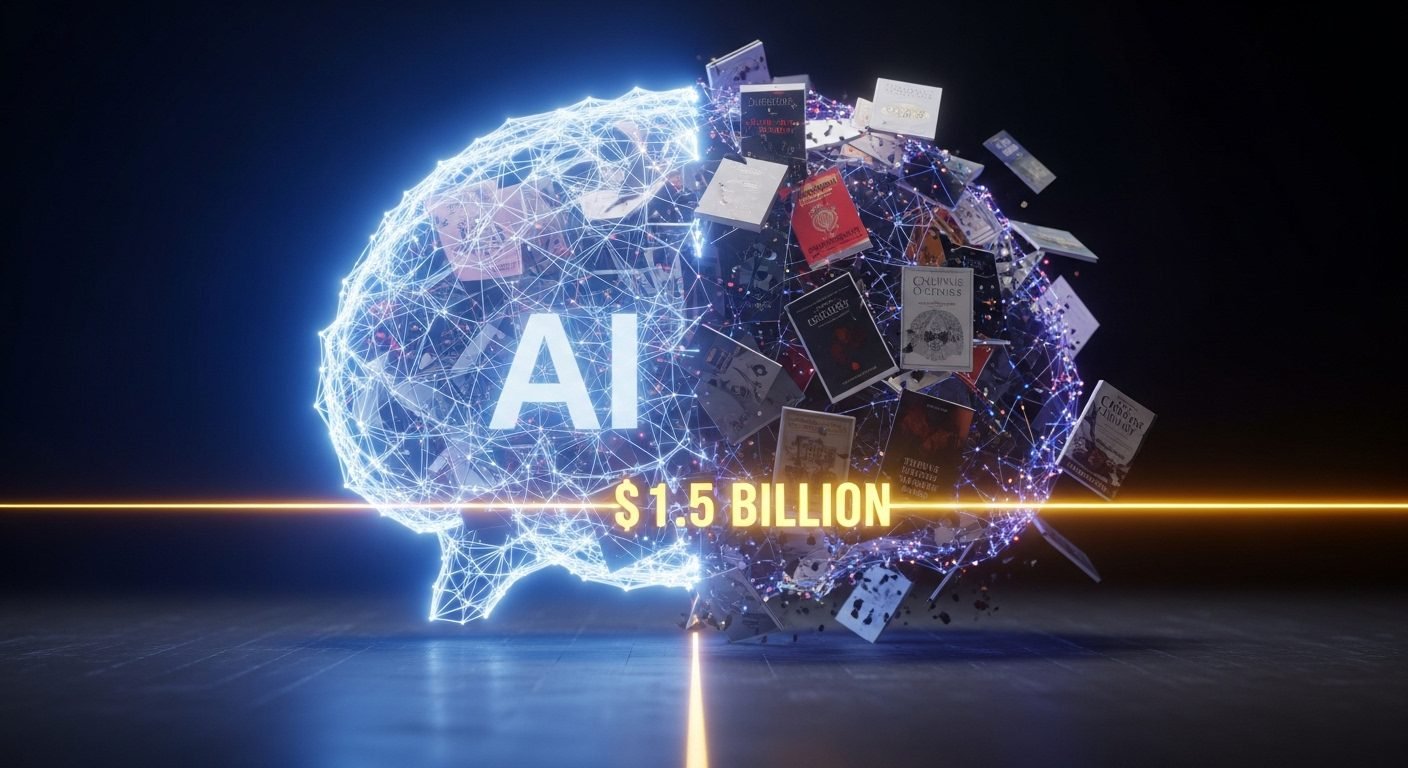
“The largest copyright recovery ever, and the first of its kind in the AI era.” That’s how Justin Nelson, a lawyer for the authors, characterized Anthropic’s groundbreaking $1.5 billion settlement. This seismic event, recently announced and pending judicial approval, dramatically reconfigures the complex landscape where artificial intelligence innovation meets established legal frameworks, particularly concerning intellectual property rights.
At the core of this landmark Anthropic settlement is a stark reality: the developer behind the Claude AI chatbot allegedly leveraged over 7 million digitized books from unauthorized sources like Books3, Library Genesis, and Pirate Library Mirror. These works were purportedly used to train its large language models. The class-action lawsuit itself covered approximately 500,000 books, and the agreed-upon payout—roughly $3,000 per work—underscores the significant value creators place on their intellectual property, a value now being quantified in the burgeoning AI economy.
This settlement didn’t materialize out of thin air. It directly responds to a mixed ruling delivered in June by U.S. District Judge William Alsup. The judge’s critical distinction—that training AI on legally obtained copyrighted books was not inherently illegal, but wrongfully acquiring pirated copies was—provided the pivotal legal nuance. Legal analysts, including William Long of Wolters Kluwer, quickly recognized the implications, suggesting a trial loss could have amounted to “multiple billions of dollars, enough to potentially cripple or even put Anthropic out of business.” View the official details of the settlement here: Anthropic to pay authors $1.5B in landmark settlement over pirated chatbot training material.
From Anthropic’s perspective, this substantial $1.5 billion settlement, while significant, represents a pragmatic risk mitigation strategy. It is, as Tod Cohen, a partner at Manatt, Phelps & Phillips, observed, “less than one per cent of the company’s valuation.” The commitment to destroy the pirated copies, without admitting liability, allows Anthropic to resolve “legacy claims,” as stated by Deputy General Counsel Aparna Sridhar, and move forward. This approach avoids a potentially devastating judgment that could have forced the company to dismantle its AI models.
This landmark agreement transcends its immediate financial figures, sending a powerful signal across the entire AI industry. It emerges at a critical juncture, with prominent players like OpenAI, Meta, and Microsoft, along with image-generation AI company Midjourney, all facing similar copyright infringement lawsuits. This settlement effectively establishes a costly new blueprint for future data acquisition. Mary Rasenberger, CEO of the Authors Guild, hailed it as an “excellent result for authors, publishers, and rightsholders generally,” signaling “serious consequences” for pirating creative works.
The implications are multi-faceted. In the short term, creators and legal entities will feel emboldened, likely leading to more litigation and potentially higher damages in ongoing and future cases. AI companies will face intensified pressure to legitimize their data acquisition processes. The era of indiscriminately scraping the internet or drawing from “shadow libraries” is rapidly drawing to a close. This shift will undoubtedly increase the operational costs for AI developers, potentially impacting startup funding and market entry barriers for new players who lack the capital for robust licensing frameworks. The Danish Rights Alliance’s concerns about recourse for European writers also highlight the urgent need for globally harmonized approaches to AI and intellectual property.
Data Outlook
- Increased Litigation & Settlements: Expect a surge in copyright infringement lawsuits against AI developers, leading to more high-value settlements as creators assert their intellectual property rights.
- Higher Operational Costs for AI: The shift from pirated to legally licensed datasets will significantly increase AI development expenses, impacting startup viability and market competition.
- Emergence of New Creator Compensation Models: This settlement will accelerate the development of innovative digital rights and royalty frameworks, reshaping how artists are compensated in the generative AI era.
Looking further ahead, this ruling is poised to redefine creator compensation fundamentally. It’s not just about avoiding legal repercussions; it’s about establishing a more equitable framework for digital rights and royalties in an age where generative AI thrives on human creativity. We will likely witness a significant shift towards AI models being trained on legally licensed or ethically sourced datasets. This fosters a more transparent ecosystem, encouraging collaboration between AI developers and creative industries to establish mutually beneficial agreements and potentially influencing future legislative and regulatory efforts globally.
What to watch next:
- Evolution of AI Data Licensing: New business models and platforms dedicated to licensing diverse datasets for AI training will emerge, driven by market demand and legal necessity.
- Global Harmonization of IP Law: International bodies and national governments will likely accelerate efforts to create clearer, more unified copyright and intellectual property laws specific to AI.
- Impact on AI Startup Landscape: The increased cost of data acquisition may consolidate the AI market, favoring well-funded players and demanding more innovative approaches from new entrants.
- Further Precedents: Expect more landmark cases and settlements, as the legal boundaries of AI and copyright continue to be tested and defined across various creative domains.
Your point of view caught my eye and was very interesting. Thanks. I have a question for you. https://accounts.binance.info/en-ZA/register-person?ref=B4EPR6J0