






Have you ever tried to send money internationally, only to be met with days of waiting and a slew of unexpected fees? You’re not alone. For too long, traditional cross-border payments have been a headache, bogged down by slow processes, high costs, and a maze of intermediaries. But a major shift is underway, one that promises to make global money movement as simple as a local transfer.
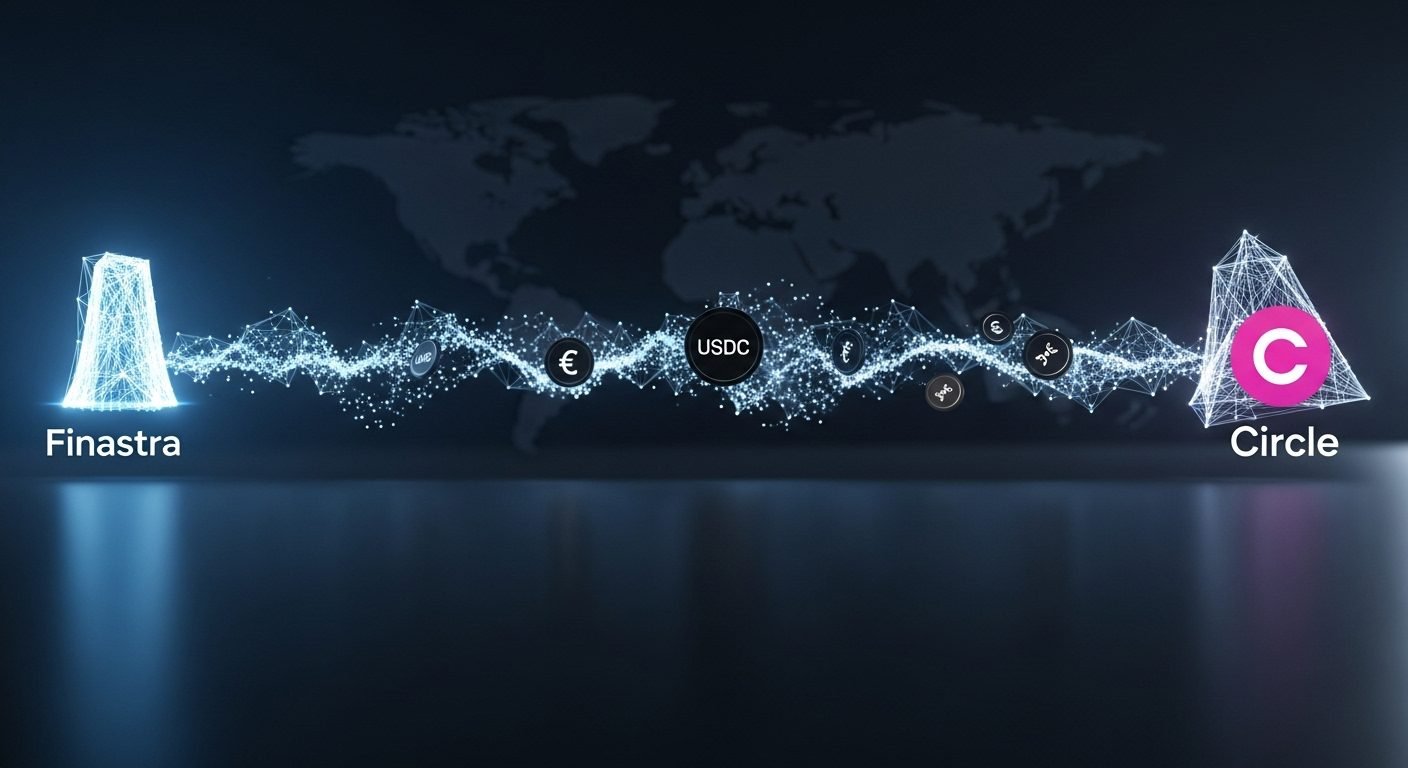
On August 27, 2025, Finastra, a giant in financial services software, announced a strategic collaboration with Circle, the company behind the widely used USDC stablecoin. This isn’t just another tech announcement; it’s a move poised to fundamentally change how banks handle international transactions, and by extension, how individuals and small businesses send and receive money across borders.
The Digital Shift: Why Now for Your Money?
This partnership arrives at a crucial moment. The world has been demanding faster, cheaper, and more transparent ways to move money globally. Traditional methods often rely on a chain of correspondent banks, each adding time and cost. Imagine needing to pay an international vendor or send funds to family abroad, only for the money to be tied up for days. It’s frustrating and inefficient.
What’s accelerated this change? Regulatory clarity for stablecoins has played a huge role. Laws like the GENIUS Act, signed in July 2025, have provided a clear framework, making stablecoins a more trusted and viable option for mainstream finance. This means regulated digital currencies like USDC, which is backed 1:1 by the U.S. dollar, can now seamlessly integrate with existing banking systems, offering the best of both worlds: the speed of blockchain with the security and trust of established financial institutions.
What This Actually Means for Your Wallet
So, how does this Finastra and Circle collaboration impact you? Finastra’s Global PAYplus (GPP) platform, which already processes a staggering $5 trillion in cross-border transactions daily, will now be connected to Circle’s stablecoin infrastructure. This allows banks to settle international payments using USDC, even if the sender and receiver are dealing in their local fiat currencies.
Think of it this way: instead of your money hopping from bank to bank, potentially sitting in various accounts for days, USDC can act as a super-fast, transparent intermediary. This drastically cuts down on processing times and reduces transaction costs. As Kate Drew, Director of Research at CCG Catalyst, notes, bringing new technology like this can “ease the process for banks facilitating these transactions, which are typically ‘slow and expensive.'” The goal is to give banks the tools to innovate without the massive undertaking of building new payment processing infrastructure from scratch, offering them a blend of resilience and digital asset innovation.
For small business owners, this could be a game-changer. Imagine quicker payments from international clients, faster disbursement to overseas suppliers, and generally smoother cash flow. Mark Nichols, a principal at Ernst & Young, highlights that companies are recognizing stablecoins enable “cheaper remittances, lower transaction costs, less friction, more open access.” Early adopters in areas like e-commerce and payroll are already seeing the benefits.
While stablecoins are a huge leap forward, they aren’t a “magical fix for all problems,” as Jurss from Nuvei points out. Challenges like ensuring enough liquidity for very high-value transactions or navigating the complexities of integrating with multiple blockchains still exist. However, the rapid growth in the stablecoin market is continuously improving liquidity. The real opportunity lies in embedding stablecoins into broader financial strategies, not just as a one-to-one replacement for every legacy rail.
Practical Takeaways
- Ask Your Bank: Inquire if your bank is adopting stablecoin settlement for international transfers. This could be a significant cost and time saver for you or your business.
- Explore Business Tools: If you run a small business with international dealings, research fintech platforms integrating stablecoins. Many are emerging to simplify global trade.
- Stay Informed: Keep an eye on the growth of regulated stablecoins like USDC. Understanding their role can help you make smarter financial decisions in an evolving digital economy.
The Road Ahead: A Hybrid Future for Your Finances
In the short term, Finastra’s vast network, which includes 45 of the world’s top 50 banks, means a significant acceleration in the adoption of digital settlement rails within traditional banking. This increased competition could put pressure on older, slower systems, pushing them to innovate or be left behind. Banks will now have immediate opportunities to “test and launch innovative payment models that combine blockchain technology with the scale and trust of the existing banking system”. Learn more about the future of digital currencies
Looking further down the line, we’re likely heading towards a hybrid payment infrastructure, blending the reliability of traditional fiat rails with the efficiency of blockchain technology. This means a more robust and responsive global payments landscape. For financial institutions, transitioning even a fraction of cross-border operations to stablecoins could free up capital currently locked in traditional accounts – a staggering estimated US$10 trillion – which banks could then reinvest or use to expand services. Discover how blockchain is transforming finance
Ultimately, this partnership isn’t just about banks; it’s about creating a more inclusive financial system. With just an internet connection, stablecoins can offer greater financial access in regions where traditional banking infrastructure is limited, truly empowering individuals and small businesses around the globe. The future of payments looks not just faster and cheaper, but also more accessible for everyone.




Your point of view caught my eye and was very interesting. Thanks. I have a question for you.