





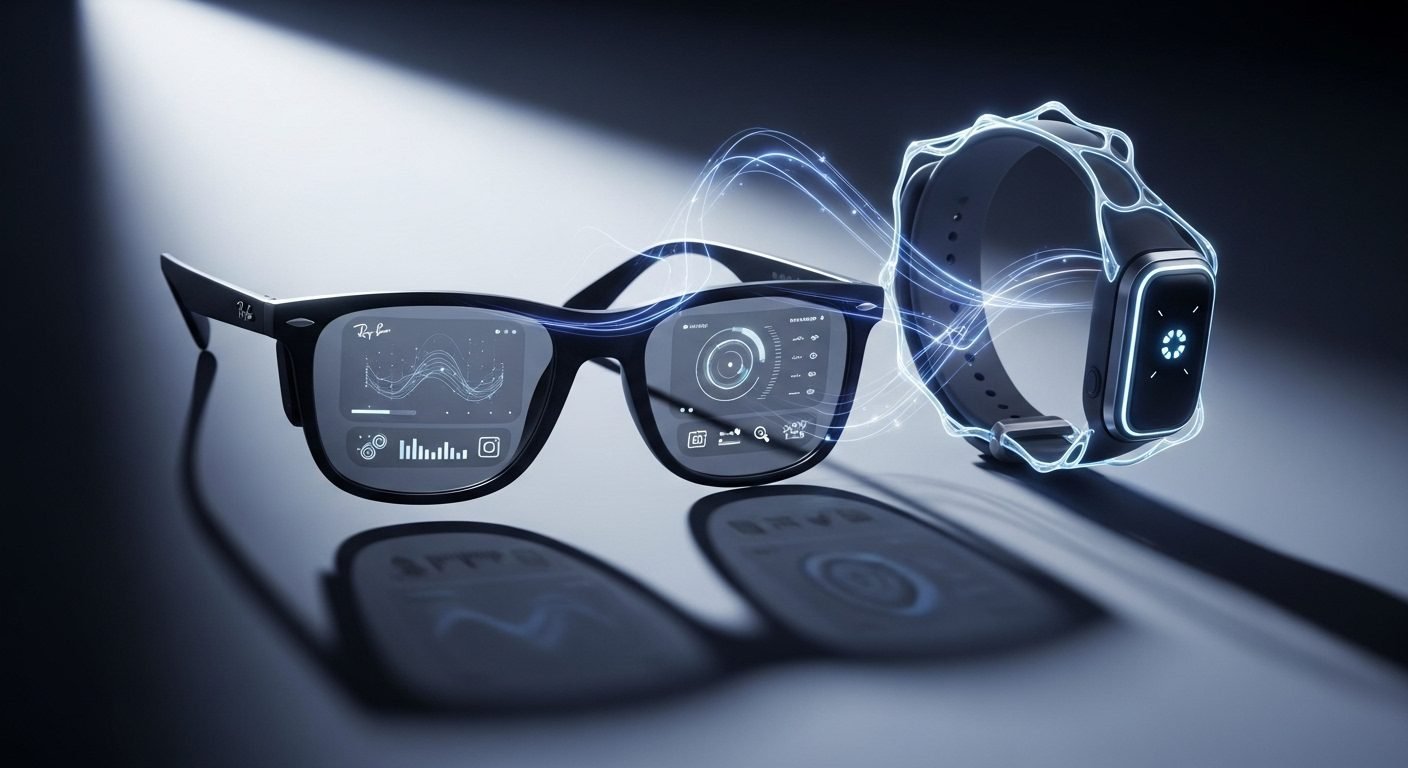
Imagine a world where your smartphone stays tucked away, and your digital life flows seamlessly through a pair of stylish glasses. Meta is pushing this vision with their new AI-powered smart glasses, the Meta Ray-Ban Display, paired with a revolutionary neural wristband. Is this the future arriving, or just another tech curiosity?
Practical Takeaways for Your Digital Life
- Consider the $799 price point: Is the promise of hands-free AI interaction worth the investment for your daily routine or business operations?
- Evaluate how the Neural Band’s subtle controls could streamline tasks, especially for professionals needing quick, discreet access to information without a screen.
- Think about privacy: While exciting, constant recording capabilities mean understanding and respecting social norms for smart glasses will be key.
Beyond the Screen: How This Changes Daily Interaction
Meta’s latest foray, the Meta Ray-Ban Display glasses, are a significant leap, marking the first time they’ve integrated a full-color heads-up display directly into a Ray-Ban lens. This isn’t just about showing you notifications; it’s about shifting how we interact with technology. With a 600 x 600 pixel monocular display in your right eye, capable of 5,000 nits brightness and a 90Hz refresh rate (though content updates at 30Hz), information can be “glanceable.” This means checking directions, seeing live captions, or getting translations without pulling out your phone.
The real game-changer is the Meta Neural Band. This wrist-worn controller uses electromyography (EMG) to detect subtle muscle movements in your forearm, allowing for hands-free navigation. Think pinching, swiping, or tapping to control your glasses. Future updates even promise “writing” text in the air. This shift from touchscreens to nearly invisible gestures could fundamentally alter how we manage tasks, from navigating a bustling city to discreetly accessing information during a meeting. Andrew Bosworth, Meta CTO, even calls these glasses the “first serious product” in the smart glasses space, signaling their intent to reduce smartphone reliance. As Jason Hiner of ZDNET noted, these glasses offer significant breakthroughs, even if they’re “a long way from replacing your smartphone” entirely. You can read more about his initial impressions here.
Explore our guide to integrating AI into your workflow
Small Business Impact: A New Frontier for Engagement?
For small business owners, the Meta Ray-Ban Display glasses present both opportunities and considerations. Imagine a retail associate instantly accessing product information or translating a customer’s query in real-time, all while maintaining eye contact. A field technician could follow step-by-step instructions overlaid on their view without fumbling with a tablet. The built-in Meta AI chatbot provides visual and text answers, making on-the-go research immediate and practical. The 12MP camera also allows for quick documentation or sharing of visual information.
However, the starting price of $799, which includes the glasses and neural wristband, represents a significant investment for many small enterprises. Availability, initially limited to select US retailers before an early 2026 international rollout, will also factor into adoption. Privacy remains a key concern. The constant presence of a camera and display raises questions about customer comfort and data security. Just as Professor Stephen Briggs warns about driving distractions, businesses will need clear policies for how and when these devices are used to prevent unintended consequences. Navigating these ethical waters will be as crucial as understanding the technological benefits.
Meta’s latest smart glasses represent a bold step towards a future where technology is seamlessly integrated into our daily lives, potentially freeing us from the constant gaze at our phone screens. While the “Meta Ray-Ban Display” and “Meta Neural Band” offer compelling glimpses into hands-free, AI-powered interaction, widespread adoption hinges on practical utility, affordability, and addressing privacy concerns. For consumers and small businesses alike, the journey to a phone-free future has officially begun, but it’s one we’ll need to navigate with both excitement and careful consideration. Learn about the future of wearable payments