




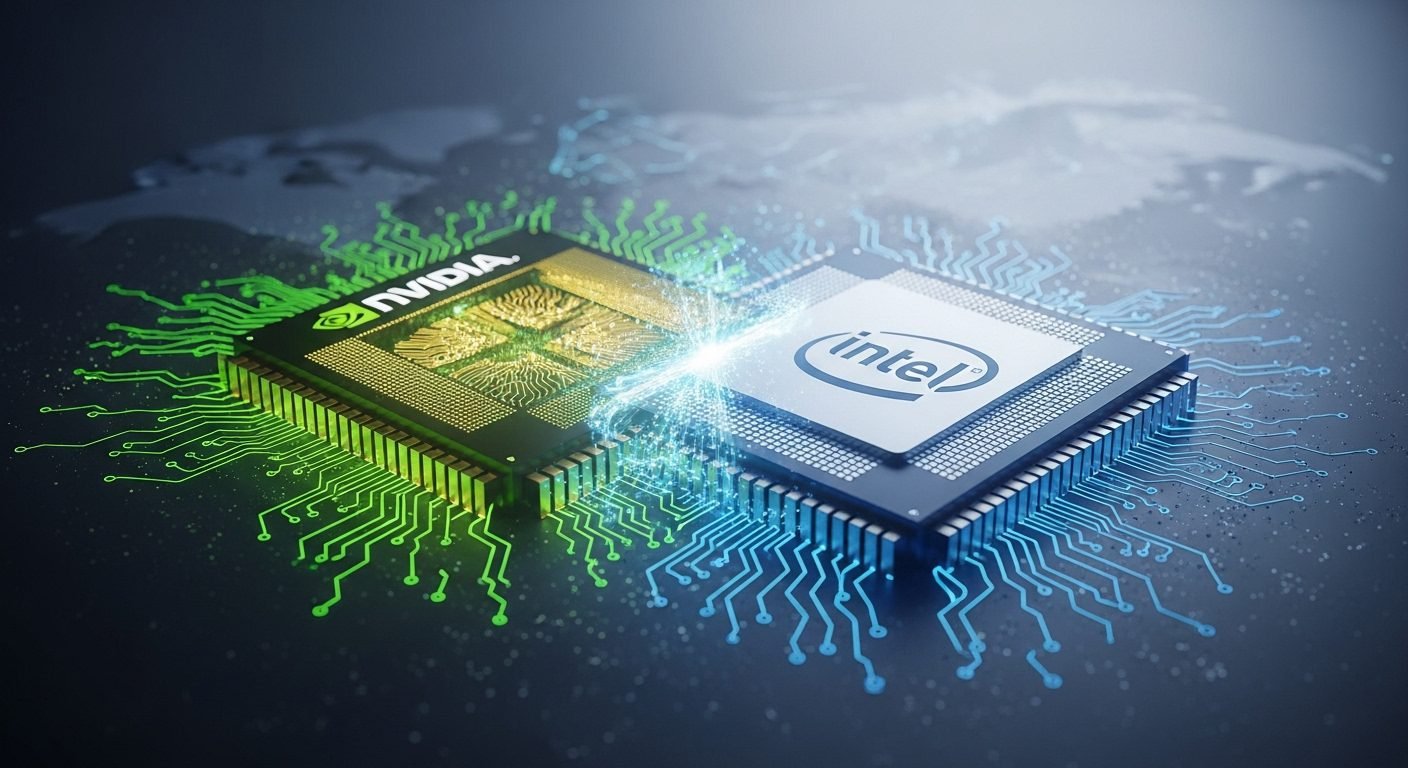
Is Nvidia’s $5 billion investment in Intel a strategic masterstroke or a calculated gamble laden with unseen complexities for the global semiconductor landscape? This pivotal move, announced on September 18, 2025, extends beyond a simple financial injection, hinting at a deeper recalibration of power dynamics within an industry critical to national security and technological advancement.
Connecting the Policy Dots
Before Nvidia’s dramatic entry, Intel had already secured a lifeline from two formidable sources. The U.S. government’s recent $8.9 billion stake, making it Intel’s largest shareholder, underscores a clear policy directive: bolstering domestic semiconductor manufacturing and reducing reliance on foreign supply chains. Japan’s SoftBank Group also injected $2 billion, signaling international confidence, yet against a backdrop of Intel’s nearly $19 billion in losses last year. These preceding investments paint a picture not just of a company in need, but a strategic asset whose stability is deemed essential by global powers.
The Security Blindspot in Collaboration
Nvidia’s $5 billion investment, which grants it an approximate 4-5% ownership, is framed as a “historic collaboration” to co-develop custom products for data centers and PCs. Jensen Huang and Lip-Bu Tan speak of “seamlessly connecting” Nvidia’s AI stack with Intel’s x86 ecosystem. While this promises innovation like x86 System-on-Chips (SoCs) with integrated Nvidia RTX GPU chiplets, the devil is in the details – or lack thereof. Crucially, the announcement specifies no immediate manufacturing deal for Nvidia’s chips by Intel. This omission is a significant security blindspot for the domestic supply chain ambition. Had Intel secured a manufacturing contract for Nvidia, it would directly challenge current foundry leader TSMC, aligning more closely with the stated governmental goal of onshore production. Instead, it leaves a strategic dependency on foreign foundries unaddressed, even as the partnership aims to expand Nvidia’s AI ecosystem and challenge competitors like AMD in the integrated CPU/GPU market. Regulatory approvals, which remain pending, will undoubtedly scrutinize these strategic implications.
| Term | Risk | Potential Impact |
|---|---|---|
| Short | Risk Name: Regulatory Approval Delays & Conditions | Potential for investment or collaboration terms to be altered or blocked, delaying market benefits and adding uncertainty. |
| Medium | Risk Name: Execution Risk of Co-Development | Failure to effectively integrate differing corporate cultures and technological stacks could result in delays, suboptimal products, and missed market opportunities. |
| Long | Risk Name: Unresolved Manufacturing Dependency | Without an Intel foundry deal, Nvidia remains reliant on external manufacturers, potentially undermining U.S. domestic semiconductor independence goals despite the collaboration. |
What Regulators Will Watch Next
The fusion of two chipmaking titans, backed by significant governmental interest, presents a complex web of opportunities and liabilities. While Intel’s shares surged by 25-30% following the news, and Nvidia saw a modest 2-3% gain, the real test lies in the execution and the specifics yet to be revealed. Regulators will undoubtedly be watching for product details and, more importantly, any future manufacturing agreements that could truly rebalance the global semiconductor supply chain. The strategic dance between rivals, national interests, and the insatiable demand for AI processing power creates a fascinating, if precarious, future for the tech sector. The ultimate success of this “historic collaboration” hinges not just on technological synergy but on navigating the intricate policy and security implications that define the modern chip era. Exploring the impact of geopolitical tensions on chip manufacturing and The future of AI hardware innovation. For further details on the immediate announcement, consider the official Intel Newsroom statement. Intel and NVIDIA to Jointly Develop AI Infrastructure and Personal Computing Products.