






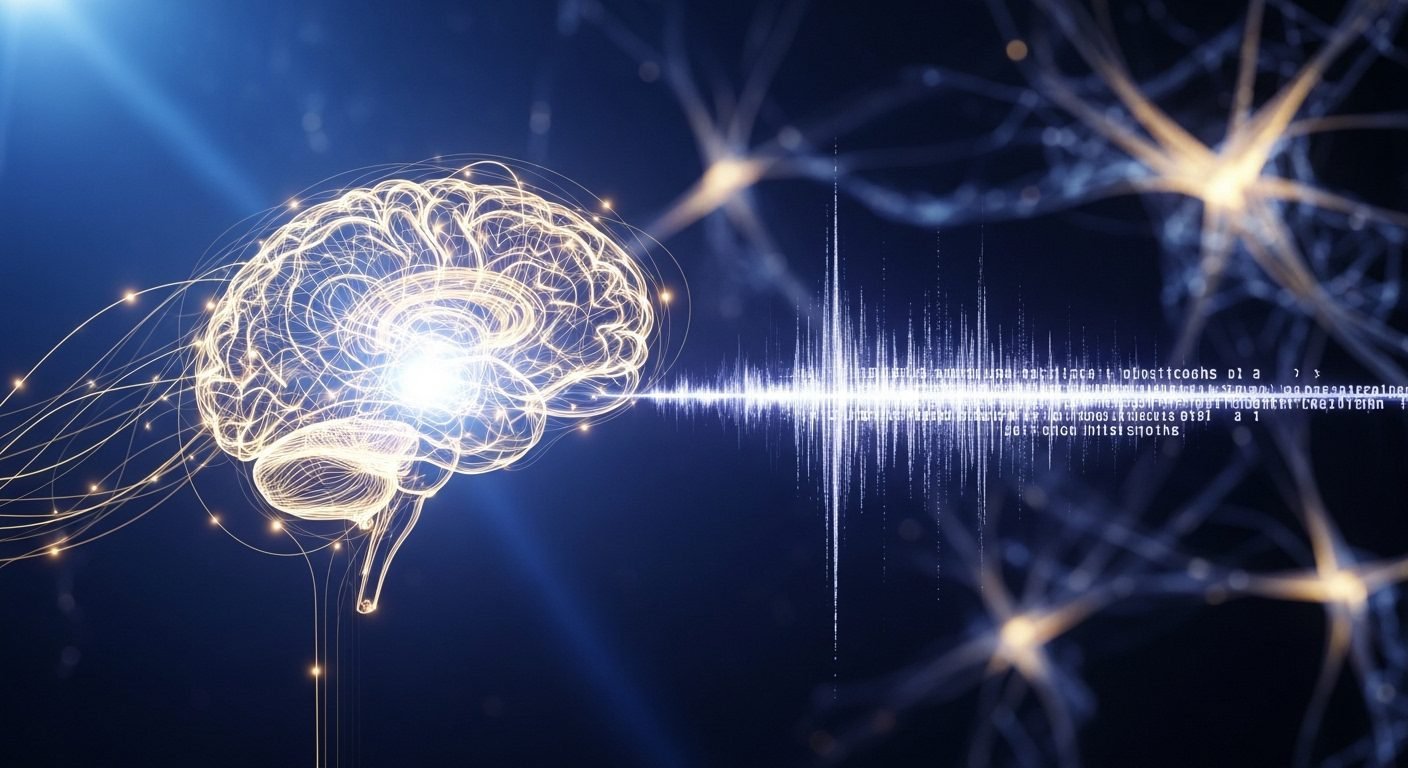
Imagine communicating without uttering a single sound, your thoughts seamlessly appearing as text. This isn’t science fiction anymore. Neuralink’s latest endeavor, the “Blindsight Echo” clinical trial, is bringing us closer to that reality, sparking both immense hope and significant questions for how we interact with technology and each other. This groundbreaking U.S. feasibility study, set for October 2025, aims to translate a person’s silent “inner speech” directly into text.
This isn’t Neuralink’s first foray into human trials. Their PRIME Study has already seen 12 individuals implanted with the N1 device. Participants like Noland Arbaugh have used it to control computer cursors with their minds, while Brad Smith, an ALS patient, impressively narrated and edited a YouTube video using the device and a custom AI model. These successes underscore the tangible, life-changing potential of brain-computer interfaces (BCIs) for individuals facing severe speech impairments due to conditions like ALS or stroke.
Decoding Your Inner Voice: What It Means for Everyday Communication
The “Blindsight Echo” trial goes a step further, targeting a new frontier: decoding inner speech. Using its fully embedded N1 implant and ultra-thin threads inserted into the brain via robotic surgery, Neuralink plans to enroll 20 participants. The ambitious goal? 80% accuracy in translating thoughts into text at a rate of 100 words per minute—a speed that rivals natural speech. Neuralink President DJ Seo envisions a world where users can interact with large language models (LLMs) without traditional input, effectively “closing the loop” by feeding AI outputs back to the user via devices like AirPods.
This move by Neuralink arrives at an opportune moment, coinciding with rapid advancements in AI and LLMs, which are crucial for interpreting complex neural patterns into coherent text. The U.S. Food and Drug Administration (FDA) has granted an Investigational Device Exemption (IDE) for this trial, following a “breakthrough device” designation earlier this year. This regulatory green light allows human testing of the unapproved device, highlighting its potential.
However, the journey isn’t without its hurdles. Experts highlight significant technical and ethical challenges surrounding inner speech decoding, particularly regarding consistency, neural signal drift, and long-term stability without daily recalibration. Ensuring the privacy and ownership of highly sensitive neural data is paramount, a concern the FDA is addressing with strict safeguards.
Practical Takeaways
- For individuals with severe speech impairments, this technology offers a beacon of hope for restoring independence and communication.
- Stay informed about BCI advancements; while early, these innovations could redefine accessibility tools in the workplace and at home.
- Consider the broader implications for data privacy and digital ethics as brain interfaces move closer to mainstream adoption.
Navigating the Neurotech Frontier: Practical Considerations and Future Outlook
The market for neurotech is booming, with Neuralink securing $650 million in funding this past June, bringing its total financing to over $1 billion. This capital fuels expanded clinical trials and global reach, with plans to enroll 20-30 new participants by year-end across several countries. While Neuralink is a prominent player, the field is competitive, with academic institutions like UCSF and Stanford, along with international competitors, making significant strides in speech-decoding BCIs.
Looking ahead, the short-term consequences of “Blindsight Echo” are clear: enhanced communication for trial participants and accelerated research across the BCI industry. Regulatory bodies will intensify their scrutiny, ensuring safety and efficacy in this rapidly evolving domain. The future of assistive technologies hinges on these early breakthroughs.
Long-term, the implications are profound. If successful, decoding inner speech could fundamentally transform human-AI interaction, moving beyond traditional interfaces to direct thought control and seamless “telepathic” communication with LLMs. This could ignite an accessibility revolution, restoring lost functions and enabling new forms of interaction for individuals with various disabilities. Understanding AI and large language models will become even more crucial as these systems merge with human thought.
However, this powerful technology also brings ethical and societal debates to the forefront, touching upon “neuro-rights,” mental autonomy, and the very definition of human identity. Elon Musk himself envisions a future where healthy individuals could receive such implants by 2030, integrating BCI as mainstream consumer technology for “enhancement.” While this future is years away, the “Blindsight Echo” trial serves as a critical step, pushing the boundaries of what’s possible and challenging us to consider the practical, ethical, and societal ramifications of truly mind-controlled technology.

Thanks for sharing. I read many of your blog posts, cool, your blog is very good. https://www.binance.com/en/register?ref=JHQQKNKN
Can you be more specific about the content of your article? After reading it, I still have some doubts. Hope you can help me.