






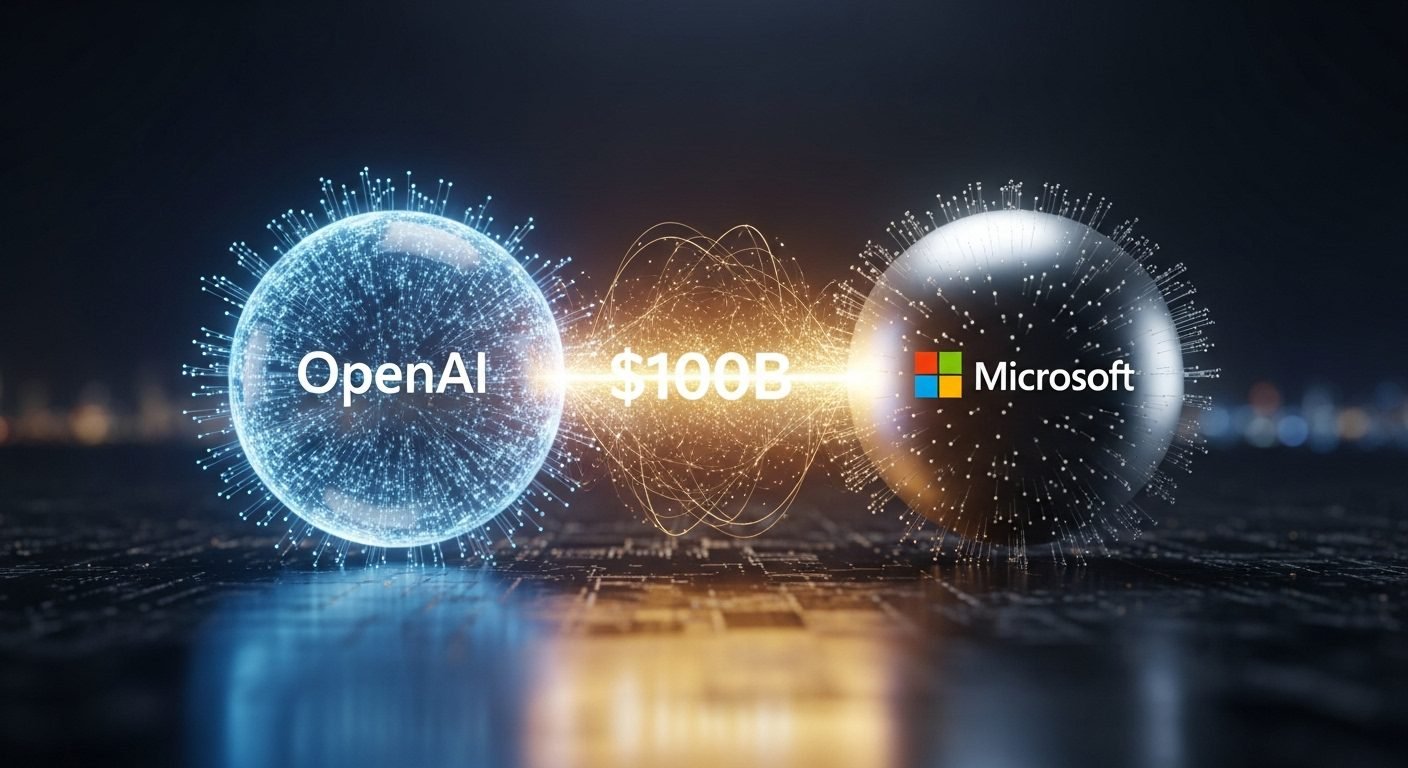
Imagine if the AI tools you rely on for everything from customer service to creative tasks suddenly became faster, smarter, or even more expensive. That’s the real-world consequence looming as OpenAI and Microsoft finalize a monumental restructuring of their partnership. The two tech giants have signed a non-binding Memorandum of Understanding (MOU), setting the stage for OpenAI’s nonprofit parent to secure an equity stake exceeding $100 billion in a newly formed for-profit Public Benefit Corporation (PBC). This isn’t just a boardroom handshake; it’s a pivotal shift designed to fuel the next generation of AI innovation and, critically, reshape how these powerful tools might impact your daily life and small business operations.
This announcement doesn’t exist in a vacuum. It appears to be a direct response to the escalating “AI arms race,” signaling OpenAI’s need for massive capital to fund projects like the ambitious “Stargate” data center, which could cost hundreds of billions. Microsoft, historically OpenAI’s largest investor with over $13 billion injected since 2019, has been diversifying its own AI portfolio, developing in-house models to reduce its reliance on OpenAI. This “coopetition” dynamic highlights the immense financial pressures and strategic maneuvering driving the entire industry.
What This Really Means for Your Small Business AI Budget
For small business owners, the buzz around OpenAI’s $500 billion valuation and $12.7 billion projected revenue in 2025 might seem distant, but these numbers directly influence the stability and cost of the AI services you use. The restructuring aims to give OpenAI greater flexibility to raise capital, which could mean more robust, diverse, and reliable AI models down the line. However, the estimated $350 billion in computing costs for OpenAI’s advanced AI raises questions about long-term sustainability and could translate to higher API pricing or altered contract terms for cloud customers.
Currently, Microsoft holds exclusive rights to sell OpenAI’s software via Azure and a substantial share of future profits, capped at an estimated 10 times their investment. While OpenAI aims to reduce its revenue share to Microsoft from 20% to 8% by decade-end (potentially retaining an additional $50 billion), the specifics of how this impacts API access and pricing for non-Azure users are still being negotiated. This revised partnership could mean increased competition among cloud providers (with OpenAI pursuing deals with Oracle and Google), potentially offering you more choice but also demanding careful evaluation of your AI infrastructure costs. The Rise of AI for Small Business Operations
Practical Takeaways
- Review Your AI Subscriptions: Keep a close eye on service agreements for any AI tools you use, especially those built on OpenAI’s models, for potential price adjustments or feature changes.
- Explore Multi-Cloud Options: Consider if diversifying your cloud computing partners for AI services makes sense, leveraging potential competition for better deals and resilience.
- Prioritize Ethical Use: As AI companies evolve, choose partners transparent about their commitment to responsible AI development, aligning with the “Public Benefit Corporation” ethos.
Navigating the AI Landscape: A Consumer’s Guide to Future Innovations
For individuals, this corporate reshuffling could subtly yet significantly shape the AI experiences delivered to your devices and digital lives. The bullish perspective suggests that the $100 billion equity stake for OpenAI’s nonprofit parent organization could lead to unprecedented funding for philanthropic initiatives focused on AI literacy and community innovation, potentially ensuring that advanced general intelligence (AGI) truly benefits humanity. This isn’t just about big tech; it’s about the future of AI in our homes, cars, and communities.
However, the transition to a for-profit PBC, even with nonprofit oversight, could dilute OpenAI’s foundational mission in favor of commercial interests. This shift might influence the types of AI features prioritized, with a greater emphasis on profit-generating applications rather than purely philanthropic endeavors. As a consumer, you might see more sophisticated, commercially integrated AI tools, but it’s crucial to remain discerning about data privacy and the ethical implications of these advancements. Understanding AI Ethics in Business
The move to a Public Benefit Corporation is also seen as a crucial step toward a potential IPO for OpenAI. Public accountability could bring increased transparency, but it also introduces the pressures of shareholder returns, which could influence everything from product development cycles to accessibility.
What’s next for your AI-powered world? This restructuring is a clear signal that the “AI arms race” is intensifying. Expect other major players like Meta, Google, and Amazon to further escalate their investments in AI development, leading to a surge of new and refined AI products and services. While the non-binding MOU still requires final approval from the Attorneys General of California and Delaware, this agreement fundamentally redefines the terms of engagement between two of AI’s biggest players. Keep a close watch on how these strategic shifts manifest in the tools you use every day, demanding transparency and value as AI continues its rapid evolution.
—




Thanks for sharing. I read many of your blog posts, cool, your blog is very good.
Your point of view caught my eye and was very interesting. Thanks. I have a question for you.